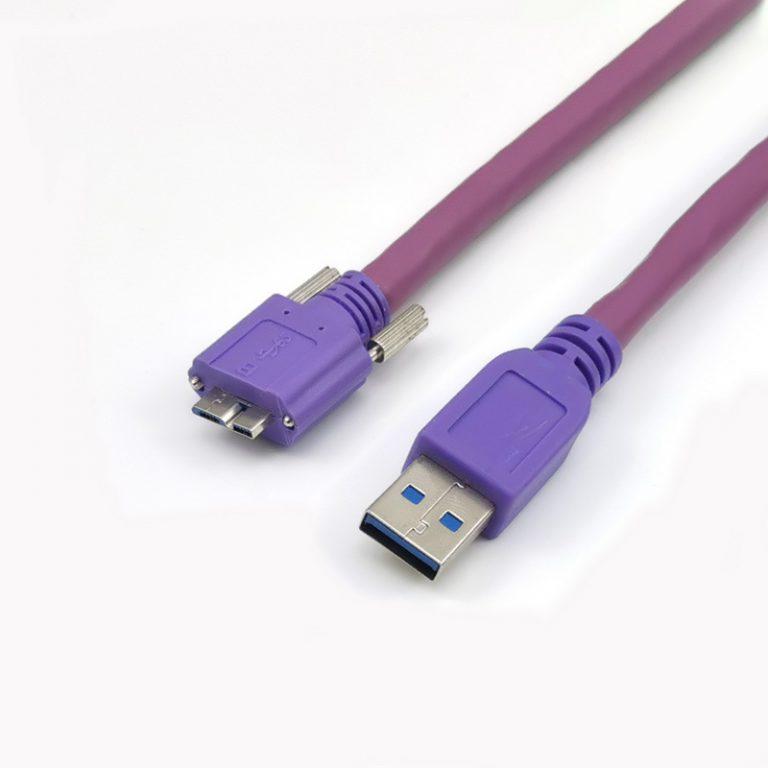
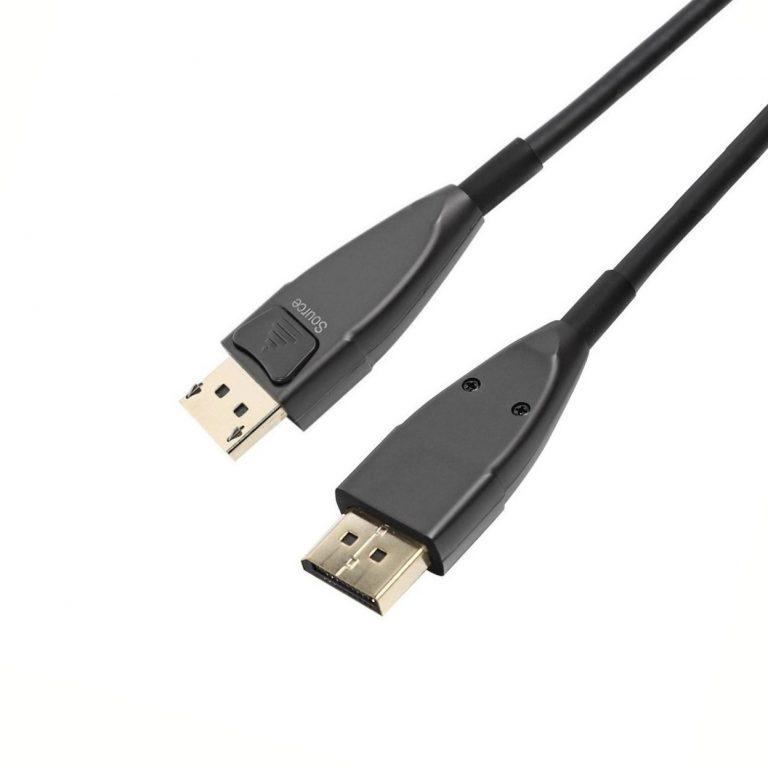
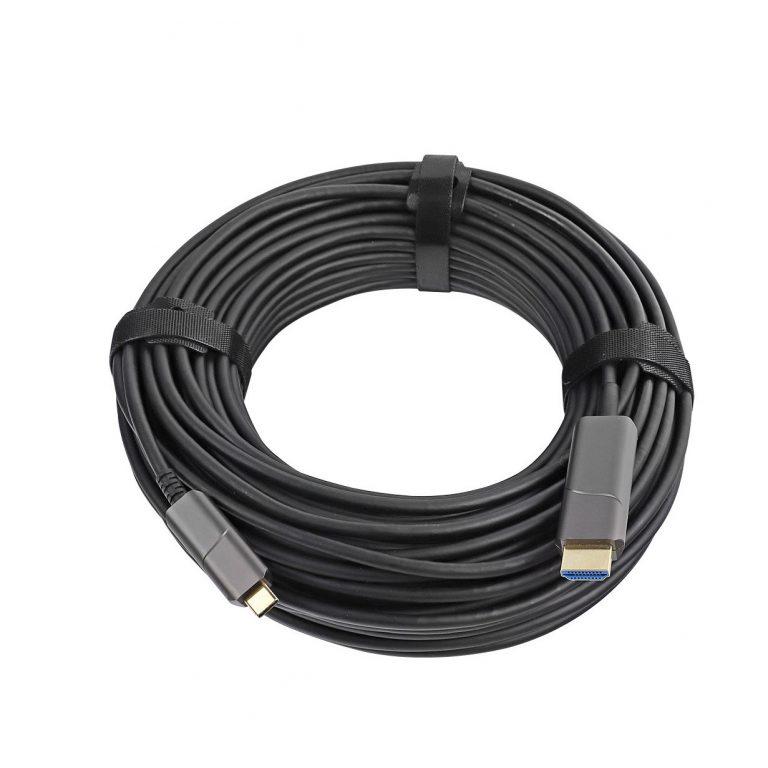
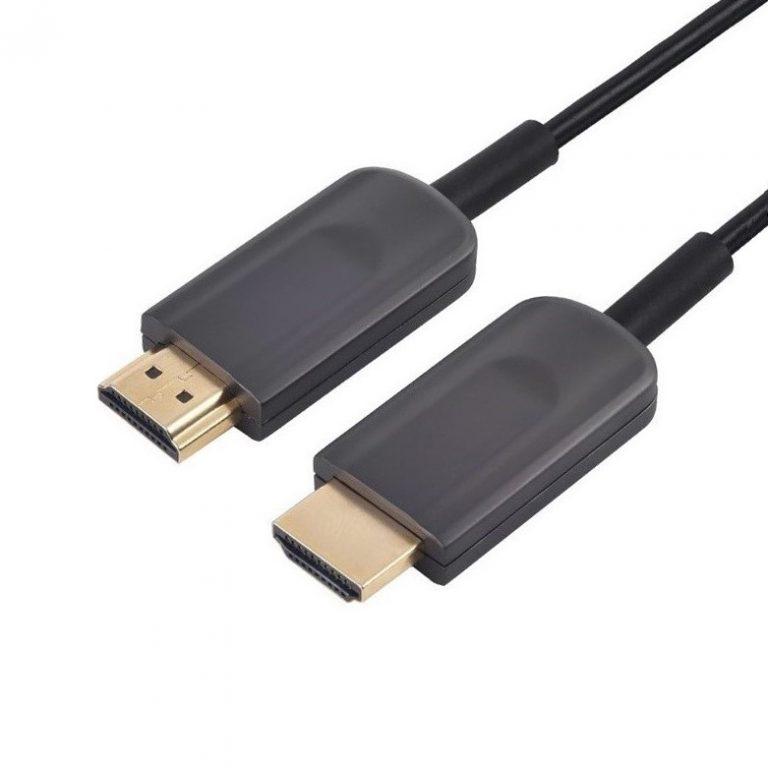
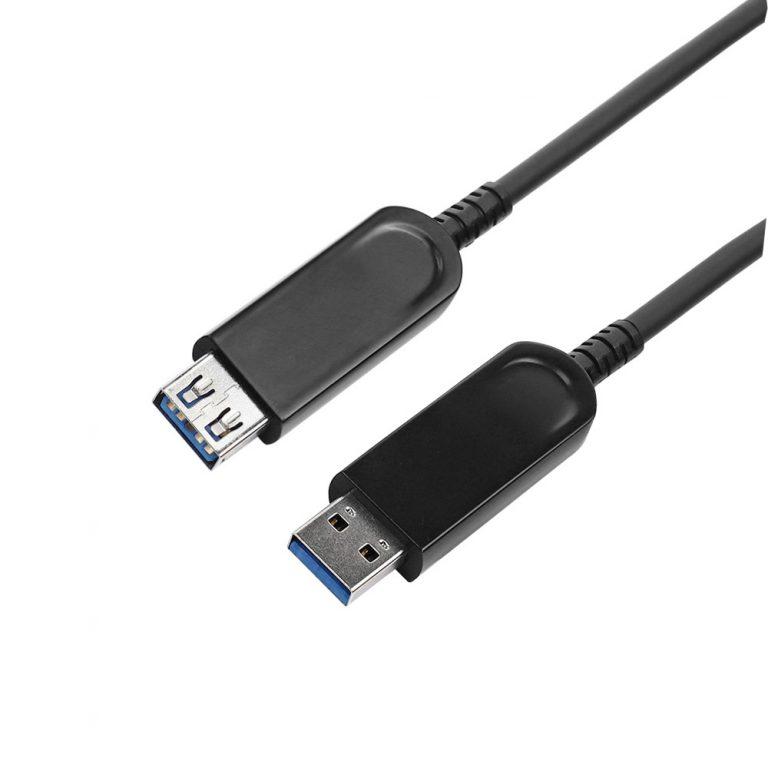
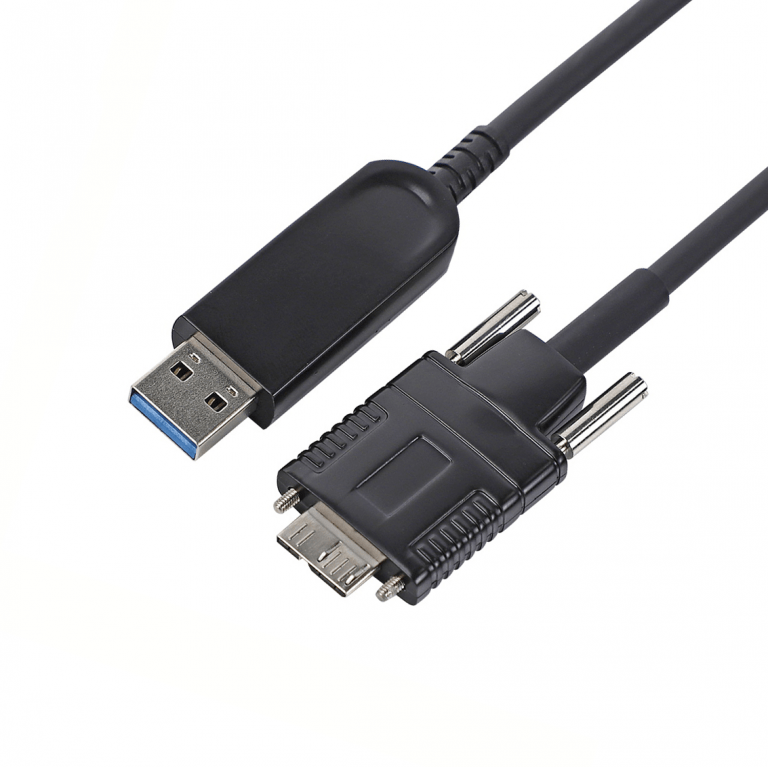
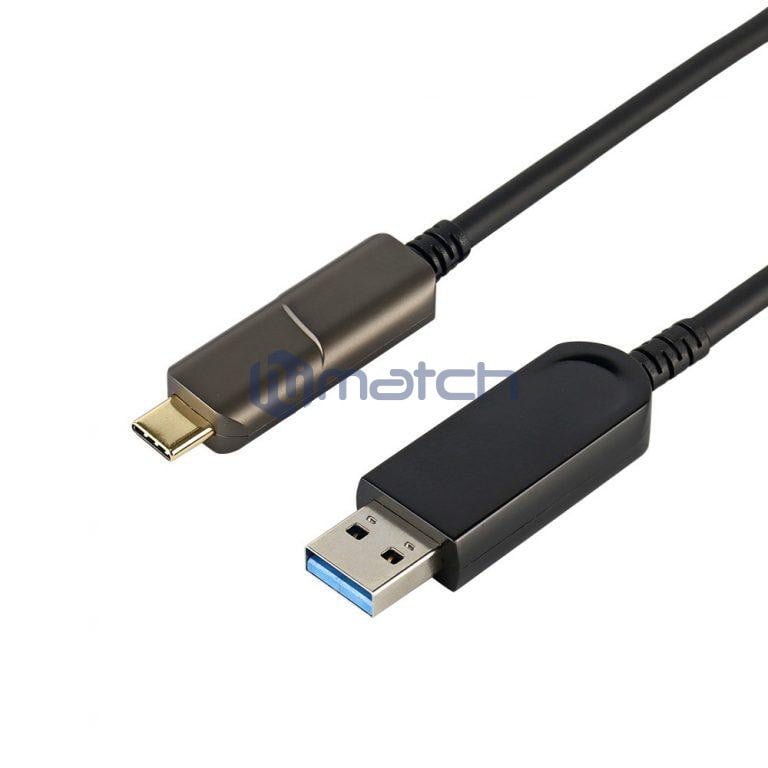
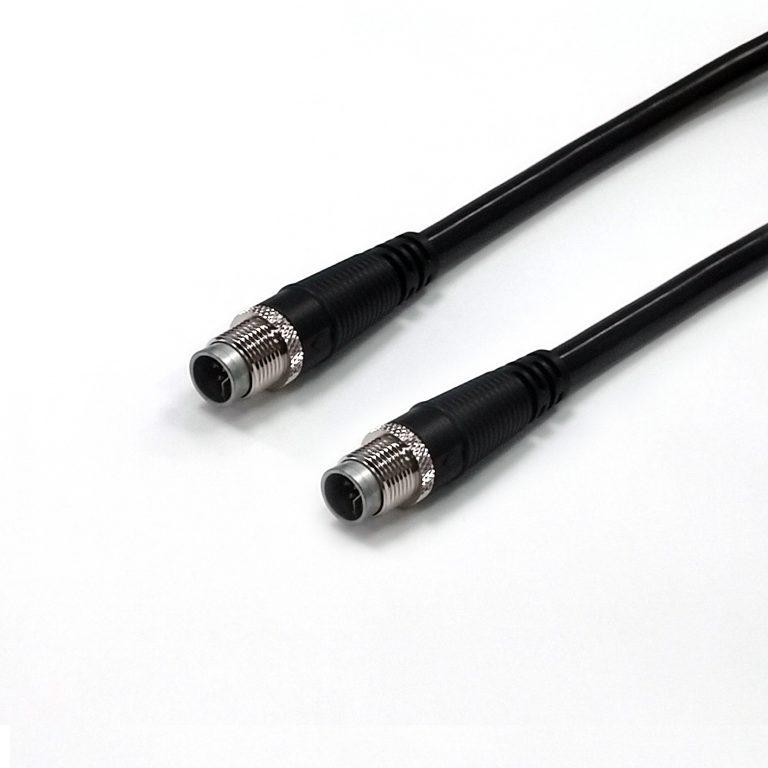
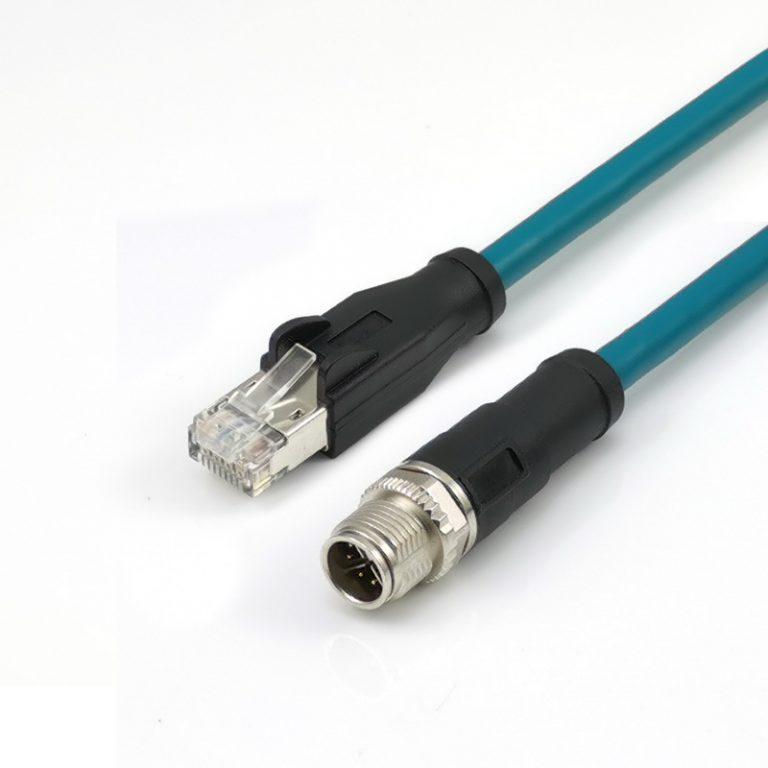
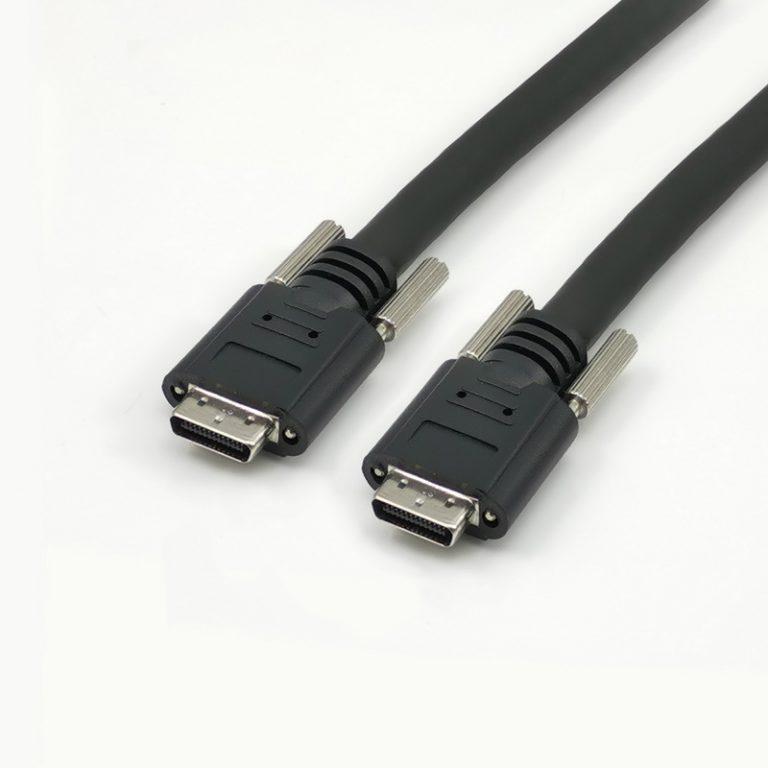
An Active Optical Cable (AOC) is a high-performance cable that utilizes optical fiber technology to transmit data signals. It incorporates active components such as optical transceivers to enhance signal integrity over longer distances compared to traditional passive optical cables.
Specifications of Active Optical Cable
Specification
Details
Cable Type
Active Optical Cable (AOC)
Optical Fiber Type
Multimode or Single-mode fiber
Data Transfer Rates
Varies (Up to multiple Gbps or Tbps range)
Cable Length
Extended lengths (e.g., 1m to 100m)
Connector Types
Various connectors (e.g., QSFP, HDMI, USB)
Power Consumption
Requires power for active components
Features of Active Optical Cable
High Data Transfer Rates: Supports high-speed data transfer for applications like data centers and high-performance computing.
Extended Cable Lengths: Capable of transmitting signals over longer distances compared to traditional cables.
Flexible Connectors: Available with various connectors such as QSFP, HDMI, USB, catering to different applications.
Enhanced Signal Integrity: Active components compensate for signal attenuation and maintain signal quality.
Applications of Active Optical Cable
Active Optical Cables are used in a variety of applications, including:
Data Centers: Connecting servers, switches, and storage devices over extended distances.
High-Performance Computing (HPC): Supporting high-speed data transfer in HPC environments.
Audio-Visual (AV) Systems: Transmitting high-quality video and audio signals in AV setups.
Networking: Extending reach in network installations.
Advantages of Active Optical Cable
Long-Distance Transmission: Ideal for applications requiring data transmission over extended distances.
High-Speed Data Transfer: Suitable for high-bandwidth requirements in data-intensive environments.
Compact Design: Thinner and lighter than traditional copper cables.
Reliability: Active components enhance signal reliability and reduce electromagnetic interference.
Working Principle of Active Optical Cable
Active Optical Cables utilize optical fiber to transmit data. Active components, such as optical transceivers, are embedded within the cable to regenerate and boost the optical signals. This enables the cable to maintain signal integrity over longer distances.
How to Make Active Optical Cable
The manufacturing process involves:
Optical Fiber Installation: Integrating optical fiber into the cable.
Embedding Active Components: Incorporating active components like optical transceivers.
Connector Attachment: Adding connectors suitable for the intended application.
Testing: Rigorous testing for signal integrity, power consumption, and reliability.
Why Choose Us
Expertise: Extensive experience in designing and manufacturing high-performance optical cables.
Customization: Tailoring cables to meet specific length, connector, and performance requirements.
Quality Assurance: Stringent testing procedures to ensure reliable performance.
Innovation: Keeping pace with advancements in optical technology.
FAQs about Active Optical Cable
Q: What is the maximum data transfer rate supported by Active Optical Cables?
A: Active Optical Cables support varying data transfer rates, ranging from multiple Gbps to Tbps, depending on the application.
Q: Can Active Optical Cables be used for video transmission in AV setups?
A: Yes, Active Optical Cables are suitable for transmitting high-quality video signals in audio-visual systems.
Q: How do Active Optical Cables differ from passive optical cables?
A: Active Optical Cables incorporate active components to enhance signal integrity over longer distances, while passive optical cables rely solely on the optical properties of the fiber.
Q: What are the power requirements for Active Optical Cables?
A: Active Optical Cables require external power to operate the embedded active components.
Q: Are Active Optical Cables compatible with various connector types?
A: Yes, Active Optical Cables come with different connectors such as QSFP, HDMI, and USB to cater to diverse applications.
Q: Can Active Optical Cables be used in networking applications?
A: Yes, Active Optical Cables are commonly used to extend reach in networking installations, especially in data centers.